
Spring sprinkler start-up that finds winter damage early
A spring sprinkler start-up brings your irrigation system back into service after a Massachusetts winter, with the water turned on slowly and every zone checked before your lawn starts depending on it. Our licensed technicians look for what the cold left behind and set the controller for the season ahead.
- When
- After the ground thaws, before the heat
- How
- Water on slowly, one zone at a time
- Damage
- Winter damage found and explained before any repair
- For
- Residential and commercial systems
Why your system needs a careful restart every spring
A sprinkler system spends the winter shut down, with the water cleared out in the fall. The spring start-up is the visit that reverses that work. The supply is reopened, the pipes are brought back up to pressure, and each part of the system is watched while it runs. It is the first time since fall that anyone has seen the system working, so anything that changed over the winter shows up here.
Winter is hard on the parts of an irrigation system that sit close to the surface. Frost can heave heads out of line. A pocket of water missed in the fall can freeze and crack a fitting. Plows and shovels catch heads along driveways and walks. Turning the water on at full force and walking away is how a small crack turns into a washed-out bed or a flooded valve box, and a slow, zone-by-zone restart catches those problems while they are still simple to fix.
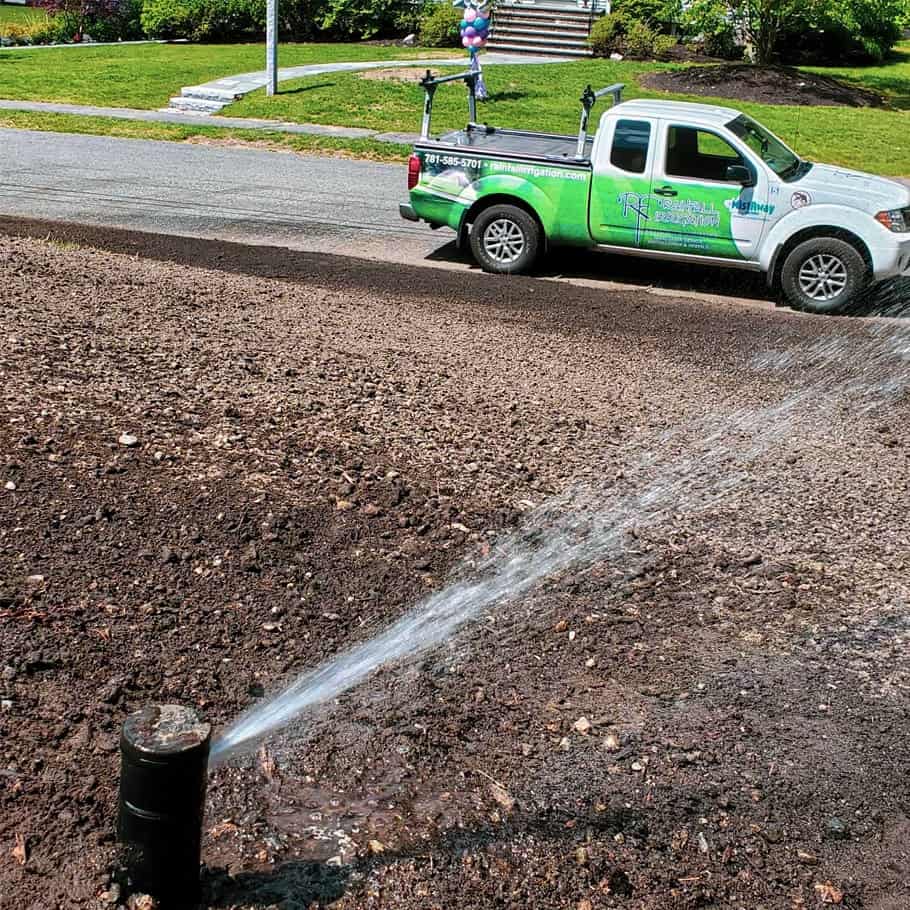 Southeastern Massachusetts
What a spring sprinkler start-up covers, in the order we work
The technician moves through the system the same way the water does, starting where it enters and finishing at the controller that runs it. Here is what gets checked at each stop.
- 01Supply turned on slowlyThe valve that feeds the irrigation system is opened gradually so the pipes fill without a sudden surge. Opening it all at once can send a pressure spike through the lines and break fittings that made it through the winter.
- 02Backflow device checkedThis device keeps irrigation water from flowing back into your household supply. It sits above ground in the cold, so it is checked for cracks, drips, and valves left in the wrong position after the fall shutdown.
- 03Each zone run on its ownZones are turned on one at a time from the controller. Running them separately shows exactly which zone has a problem, instead of guessing across the whole yard.
- 04Heads checked for damageEvery head is watched as it pops up. We look for heads cracked by ice, clipped by a plow or shovel, or run over by a mower, and for heads that frost has tipped crooked or sunk below the grass.
- 05Clogged nozzles clearedDirt and debris settle into nozzles and filter screens over the winter. A clogged nozzle throws a weak or broken pattern, so it is cleaned or replaced until the head sprays the way it should.
- 06Heads adjusted for coverageSpray direction and distance are set so water lands on grass and beds, not on the driveway, the walk, or the side of the house. Gaps that would leave dry spots are corrected.
- 07Valves and leaksEach valve has to open its zone and close it fully. We watch for water pooling around heads, soggy ground over buried pipe, and a valve box that slowly fills with water.
- 08Controller program and clockThe clock is reset and the schedule is set for spring watering, which is lighter than what the lawn needs in summer. If you want a controller that adjusts itself to the weather, ask about smart irrigation controller installation.
- 09Rain sensor testedThe rain sensor should stop the system from watering when it rains. A sensor that was damaged, disconnected, or covered over the winter lets the system run right through a storm.
What turns up at start-up, and what happens next
Some systems come through the winter needing only cleaning and adjustment. When the cold did leave damage behind, it tends to show itself in one of these ways once the water is back on.
Cracked heads, broken fittings, and failed valves are handled as a sprinkler repair, with the problem explained first so you can decide how to proceed.
| Found at start-up | What happens next |
|---|---|
| Water bubbling or gushing around a head | The head is replaced and the zone is run again to confirm the fix |
| A head that will not pop up or sits crooked | Cleaned and reset where possible, replaced if the head itself is damaged |
| A zone that will not turn on | The zone is traced from the controller to its valve to find where the signal or water stops |
| A zone that will not shut off | The valve is cleaned or rebuilt, or replaced if the body is cracked |
| Weak spray across a whole zone | The leak is located and repaired, nozzles are cleaned, and the zone is checked again |
| Soggy ground or a sunken spot over a line | The spot is dug out, the section is repaired, and the zone is retested |
| Dripping or spraying at the backflow device | The parts are repaired or the device is replaced, depending on the damage |
| A blank controller or the wrong schedule | Power and wiring are checked and the spring program is entered |
When to schedule your spring start-up
The right window opens once the ground has thawed and hard freezes are behind us, and it closes before the heat arrives and the lawn starts needing regular water. Start too early and a late cold night can freeze the water now sitting back in the pipes and the backflow device. Wait too long and winter damage goes unnoticed until a hot, dry stretch, when the lawn shows it first.
How to get ready for the visit
- Clear the valve boxRake away leaves, mulch, or soil covering the valve box lid so it can be opened.
- Make the controller reachableIf it hangs in a garage, basement, or shed, let us know how the technician can get to it.
- Note last season's problemsA dry patch, a zone that acted up, or a head that sprayed the house is worth passing along.
- Mention what changed in the yardNew beds, a new patio, or fresh sod since last year can change how zones should be set.
- Leave the water offLet the technician open the supply so the lines fill slowly and can be watched as they do.
Get on the spring start-up schedule
Send us a few details about your property and your system, and we will follow up to set a visit once the ground has thawed.
Start-up and winterization work as a pair
A system cleared properly before the freeze usually comes back in spring with little to fix. A system that went into winter holding water is where cracked heads and split fittings come from. See how sprinkler winterization works.
Rainfall also offers seasonal maintenance plans that keep a working system on a regular schedule of care. See irrigation maintenance plans for how a plan fits your property.
Start-ups for homes and commercial properties
Rainfall Irrigation has served irrigation customers since 1987 and now works with more than 1,500 customers across the South Shore, the Cape and Islands, and Boston and MetroWest. Our licensed technicians start up residential and commercial systems alike.
Start-ups are done by licensed technicians, and our company leadership was formally trained through the UMass Stockbridge School of Agriculture.
Homes
A residential start-up usually covers the lawn, the garden beds, and any drip lines along plantings. Before the technician leaves, you hear what was found, what was adjusted, and how the controller is set, so you can change the schedule yourself if you want to.
Commercial and association properties
Property managers, condominium associations, and commercial property owners tend to have larger systems with more zones, sometimes more than one controller, and heads along parking areas and walks where plow damage is common. Tell us about gates, locked rooms, and who holds the keys when you book, so every controller and backflow device can be reached.
What homeowners ask about turning the system back on
Have a question about your own system? Call 781-679-1388, Monday to Friday, 8:00 AM to 4:00 PM.
Plan for after the ground has thawed and the risk of a hard freeze has passed, and before the weather turns hot and dry. In Southeastern Massachusetts that timing shifts from year to year, so the visit is set by conditions rather than a fixed date.
You can, but opening the supply all at once can send a surge through the pipes, and winter damage is easy to miss if nobody watches each zone run. A spring sprinkler start-up brings the water on slowly and checks every zone, the backflow device, and the controller. If you do it yourself, open the valve gradually and walk the yard looking for leaks.
The technician explains what was found and what it means before any repair. Common winter damage includes cracked heads, broken fittings, and valves that stick open or closed. Those are handled as repairs, and each one is explained first so you can decide how to proceed.
Yes, and it matters more. Water left inside over the winter is what cracks pipes, heads, and backflow devices. Tell us when you book so the technician knows to bring the system up with extra care and check every zone closely for freeze damage.
Yes. The clock is reset, the program is set for spring watering, and the rain sensor is tested. Watering needs change as the weather warms, so a mid-season visit or a smart controller that adjusts to the weather helps keep the schedule matched to the season.
Bring your sprinkler system back for spring
Tell us about your property and your system, including anything that acted up last season, and we will follow up to schedule your spring start-up.