
Sprinkler system installation that covers the whole lawn
Sprinkler system installation from Rainfall Irrigation puts spray heads and rotors in the ground so every part of your lawn gets the water it needs, from the sunny front yard to the shaded strip along the fence. We space the heads so their spray overlaps, split the zones by how much sun the grass gets, and build the lines so they can be cleared before a Massachusetts winter.
I had a new sprinkler and dripline system installed and am very happy with the final result. Matt and his crew were friendly and great to work with. They made sure all my expectations were met and every question was answered.
How head spacing decides whether a lawn stays green
A sprinkler head puts down the most water close to itself and less toward the end of its throw. When every head throws water all the way to its neighbors, the light edges overlap and add up to an even soak. Switch between the layouts to see why, then see which heads do the work.
Each head's spray reaches the heads beside it. The bar above the lawn marks one spacing, equal to one throw.
01Every head reaches the next head
This is the layout we design toward. Corner heads water a quarter circle, edge heads a half circle, and heads in the open lawn a full circle. Each spray ends at the neighboring heads, so every patch of grass is covered from two or more directions.
Overlap also protects the lawn on a breezy morning. When wind shortens the spray from one side, water from the other side still lands on the grass between them.
The amber circles mark the dry gaps where no spray reaches.
02Fewer heads, weaker spots
Stretching the distance between heads saves a few parts, and the lawn pays for it. The spray from each head no longer reaches its neighbors, so the grass halfway between them gets only the thin edge of each pattern, or nothing at all.
Those gaps show up as brown rings and dry patches in the same places every summer. The usual response is to run the zone longer, which soaks the grass near the heads to reach the dry spots and still leaves them weaker than the rest.
Left: zone 1 in full sun. Right: zone 2 in shade, on its own valve with closer head spacing.
03Sun and shade get separate zones
Grass in full afternoon sun can use far more water than grass under a line of trees or on the north side of the house. Put both on one valve and one of them loses: the sunny side browns, or the shady side stays soggy and thins out.
Splitting the lawn into zones by exposure lets the controller give each area its own run time. Both zones still use head-to-head spacing inside their own borders, and a zone line follows the edge of the shade.
- Spray headsFixed-pattern nozzles for small lawns, side yards, and curved edges. Strip patterns keep water off the walk on narrow grass. They water quickly, so on heavy soil or a grade a run is often split into shorter cycles.
- RotorsGear-driven heads that swing a stream slowly across open lawn. Longer reach means fewer heads on a big area, with longer run times because each pass puts down less water.
- Rotary nozzlesMany small rotating streams on a spray head body. They apply water slowly, giving it time to soak in on slopes and tight soil instead of running off.
04Matched precipitation, in plain terms
Every head in a zone should put down water at the same rate. A half-circle head covers half the area of a full circle, so it gets a nozzle that delivers about half the water, and a quarter-circle head about a quarter.
When the nozzles match, the corners and the middle of the zone finish their run at the same depth. When they do not, one spot floods while another stays dry, and no run time fixes both. The same reasoning keeps rotors and spray heads on separate valves.
Water that reaches every corner of the grass, on a schedule
A lawn sprinkler system is buried pipe feeding pop-up heads that rise when a zone turns on and drop back flush with the turf when it shuts off. A controller opens one valve at a time, and each valve runs a group of heads for as long as that part of the lawn needs. Turf watered deeply in the early morning, a few times a week, grows deeper roots and holds its color through the dry weeks that most South Shore summers bring.
When beds, drip lines, and the rest of the yard should be planned with the lawn, our irrigation system installation covers the whole property. Most people call us about the lawn itself after a summer of fighting the hose. Tap each sign that sounds like your yard.
A sprinkler system installation, step by step
Design comes first, because head spacing and zone sizes are decided by the water you have before a shovel touches the yard. Your quote reflects that design, so you know how many zones you are getting, where the heads go, and which controller runs them before any work begins.
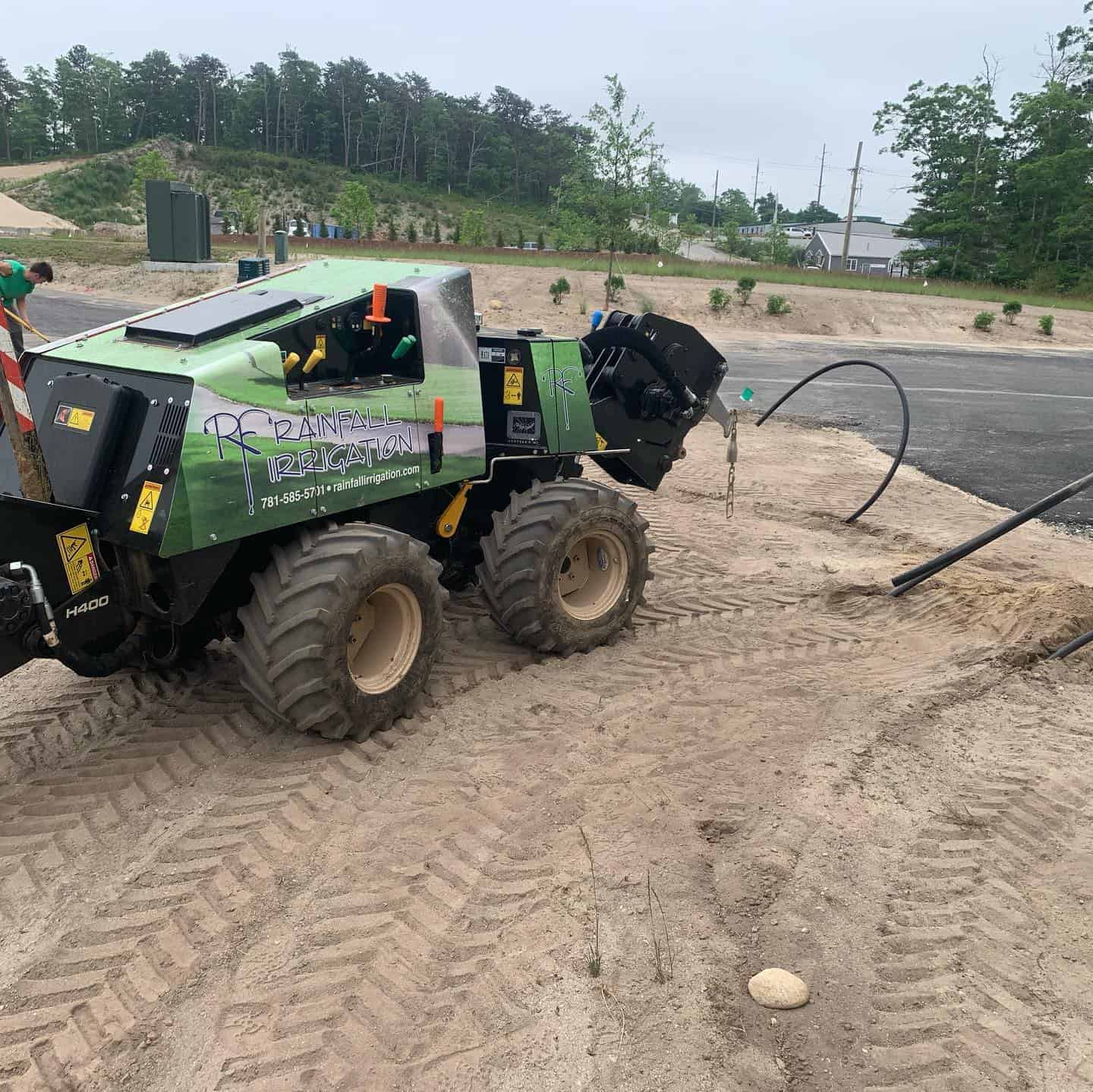 Irrigation project
- 1
Measure the water supply
We check the pressure and flow available at your water source, whether town water or a private well. That number sets how many heads can run at once, which sets the size of each zone.
- 2
Lay out heads and zones
Heads are placed head to head around the edges first, then filled in across the open lawn. Areas are grouped by head type and by sun and shade, and the controller location is chosen.
- 3
Mark before digging
Underground utilities are marked before any ground is opened, and we flag head locations, valve spots, and pipe routes so you can see the plan on the lawn itself.
- 4
Connect the supply and set valves
The system is tied into the water source with a backflow preventer, which keeps lawn water from being drawn back into your drinking water. Zone valves are grouped in valve boxes.
- 5
Run pipe and set heads
In open turf, pipe is pulled in or set in a narrow trench, depending on the lawn and the ground. Pipe crosses under walks and driveways where needed, and each head is set level with the finished grade.
- 6
Wire the controller
Valve wiring runs to the controller. Many homeowners pair a new system with a smart irrigation controller and a rain sensor so the lawn is not watered in a downpour.
- 7
Flush, test, and adjust
Lines are flushed of debris before nozzles go on. Each zone is run while we adjust arcs and throws to stay on the grass, then the controller is programmed and we walk the system with you.
Why coverage gaps show up in July
Every system here is emptied before the ground freezes during sprinkler winterization each fall, so the layout has to be right before the dry weeks arrive.
Dry weeks do the damage
A wet spring can hide a weak layout. Coverage gaps show up in the dry stretches of July and August, which is why spacing and zoning are settled at install time, not after the lawn browns.
Cost factors for a sprinkler system installation
A sprinkler quote is built from the head layout, so we price it after walking the lawn. These are the things that move it.
| Factor | How it changes the job |
|---|---|
| Lawn size and shape | Open rectangles take fewer heads than lawns broken up by beds, walks, and curves. |
| Number of zones | Set by your water supply and by how many sun, shade, and slope areas the lawn has. |
| Head and nozzle mix | Rotors, spray heads, and rotary nozzles each fit different areas and carry different costs. |
| Ground conditions | Rocky soil, ledge, and tree roots slow the work compared with open, sandy ground. |
| Crossings | Pipe that has to pass under a driveway, walk, or patio adds labor. |
What to expect on install day and through the seasons
Running pipe under an existing lawn disturbs it. The lines along the pipe runs settle and fill in as the grass grows and the new system waters it, though how fast depends on the season, the soil, and the condition of the turf to begin with.
Heads get knocked by mowers and tires, and a zone that looked right in May can drift by August. Seasonal visits keep the coverage you paid for.
- Visible marks at firstLines along the pipe runs and small patches where heads and valve boxes go in.
- Some spots may need helpA little seed or topsoil where the turf is slow to fill back in.
- Every zone run in front of youYou see the coverage for yourself before the crew leaves.
- A controller walkthroughHow the schedule works, how to run a zone by hand, and where the shutoff is.
From a first system at home to turf on a commercial site
For homeowners, a sprinkler install is often a first system on a yard watered by hand for years. Others already have sprinklers in the front and want heads added to a back lawn, a new section of sod, or a side yard the original system skipped. When an existing system has the water supply and controller room to spare, adding a zone can make more sense than starting over, and we tell you which route fits your yard.
On commercial and association lawns, heads along curbs and walks take hits from mowing crews and foot traffic all season, so layout and head placement matter as much as coverage.
Rainfall has installed and maintained the irrigation systems at our commercial properties for years. They offer fair pricing, knowledgeable technicians, responsive service, and consistently great work. We highly recommend them.
Sprinkler install questions
Have a question about your own lawn? Call 781-679-1388, Monday to Friday, 8:00 AM to 4:00 PM.
Often, yes. We check whether the water supply can carry another zone and whether the controller has a spare station. If both check out, a full new sprinkler system installation is not needed, and heads can be added for a back lawn, new sod, or a missed side yard. If the existing system is worn out, we say so and explain the options.
There will be visible marks along the pipe runs and where heads and valve boxes go in. Those areas settle and grow in over time with regular watering, though some spots may need seed or topsoil, and how quickly they fill in depends on the season and the turf.
Yes. Edge heads use part-circle arcs, strip nozzles fit narrow grass along walks, and each zone is run while arcs and throws are adjusted, so water stays on the lawn.
The size and shape of the lawn, the number of zones your water supply and sun exposure call for, the mix of heads, ground conditions such as ledge or roots, and pipe crossings under paving. We price a sprinkler system installation after walking the property, so the quote matches your yard.
Pop-up heads sit level with the finished grade and drop back down when a zone shuts off, so mowers pass over them. Heads can still be knocked or tilted by mower wheels and tires over a season, and a damaged head is a straightforward repair.
Tell us about the lawn you want watered
Share the size of the yard, whether you are on town water or a well, and any sprinklers already in the ground. We will follow up to set a time to walk the lawn and talk through heads, zones, and price.