
Outdoor security lighting for the places that go dark first
Outdoor security lighting from Rainfall Irrigation puts steady, well-aimed light on the driveways, doors, side yards, and back corners of a property that disappear once the sun sets. We plan where each fixture goes and how it turns on, install it, and keep it working through South Shore winters.
Rainfall Irrigation absolutely earned this review. Matthew Donovan and his crew were outstanding from start to finish. They worked incredibly hard without cutting corners, stood behind their work, and made sure the system operated perfectly. The workmanship, professionalism, and customer service exceeded my expectations.
What outdoor security lighting is for
Security lighting is permanent outdoor lighting placed where people come and go after dark and where a property is hard to see at night. It is part of our outdoor lighting services, and its job is practical: you can see the steps in front of you, see who is at the door, and see the side of the house from a window before you walk out.
Most homes already have a light by the front door and maybe one over the garage. The trouble is everything in between. A single bright fixture throws hard shadows beside it, a side door used a few times a night sits in the dark, and the path to a shed or back gate is guesswork. Good security lighting fills those gaps with even light, so no one part of the property stands out as the dark spot.
We work on homes, commercial properties, and condominium associations. The same approach applies to each: start with where people actually walk and park after sunset, then decide how bright each area needs to be and what should switch it on.
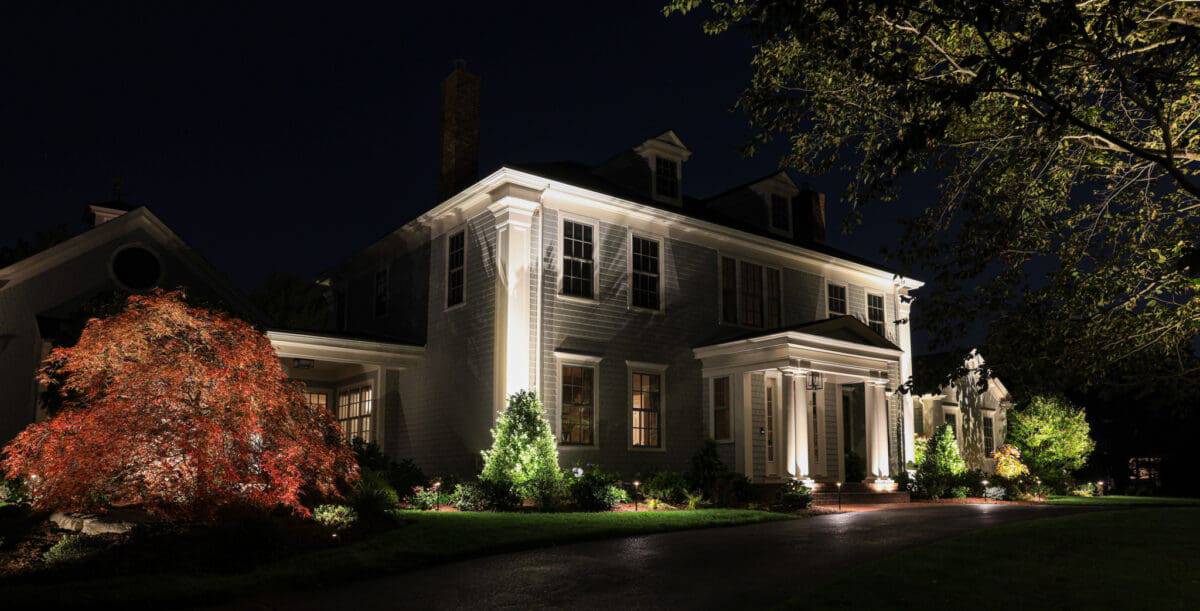 Rainfall lighting project
Where is your property dark after sunset?
Think about the last time you came home after dark or let the dog out at night. Tap every area that is hard to see. The meter fills as you go and suggests where to start.
How each area can be lit and switched on
The fixture matters, but how it turns on matters just as much. Most properties end up with a mix, chosen area by area.
| Approach | How it works | Where it fits | Worth knowing |
|---|---|---|---|
| Motion-activated | A sensor switches the light on when it picks up movement in its range, then turns it off after a set period. | Side yards, back doors, sheds, and other areas that are quiet most of the night. | Aiming the sensor at the approach path, not the street or a busy tree line, cuts down on false triggers from cars and animals. |
| Dusk-to-dawn | A light sensor turns the fixture on as daylight fades and off again in the morning. | Front entries, driveways, and walks that people use at any hour. | A steady, moderate level usually works better than a bright one, since it lights the route without glare. |
| Timed | A timer runs the lights for the hours you choose, such as evening until bedtime. | Patios, garage fronts, and walks used mainly in the evening. | Schedules should be checked as the seasons change, since sunset moves a long way between June and December. |
| With landscape lighting | Security fixtures are planned alongside path and accent lights, so the whole property is lit as one layout. | Homes that want a safe, well-lit property that also looks good at night. | Soft light across the yard reduces the hard contrast that makes the dark areas beside a single floodlight so deep. |
Brighter is not the same as safer
The most common problem with security lighting is too much light in one place. A powerful floodlight aimed out across a yard blinds anyone looking toward it, including you from the window, and makes the areas just outside its beam look darker than they are.
Well-planned outdoor security lighting spreads more modest light across the places people use, aims it down onto the ground, and keeps it off the street and out of the neighbors' windows. The result is a property where you can see a person standing at the edge of the driveway, not just a bright circle on the pavement.
- Light the route, not the stopFixtures are spaced along the walk from the car to the door so there is no dark stretch in the middle.
- Aim down and shield the sourceLight pointed at the ground shows the surface and the steps, and a shielded fixture keeps the bulb out of your eyes.
- Place fixtures where snow will not bury themLow fixtures along driveways are set back from where plowed snow ends up, and some areas are better lit from the house.
- Match the control to the areaSteady light where people walk often, motion light where they rarely do.
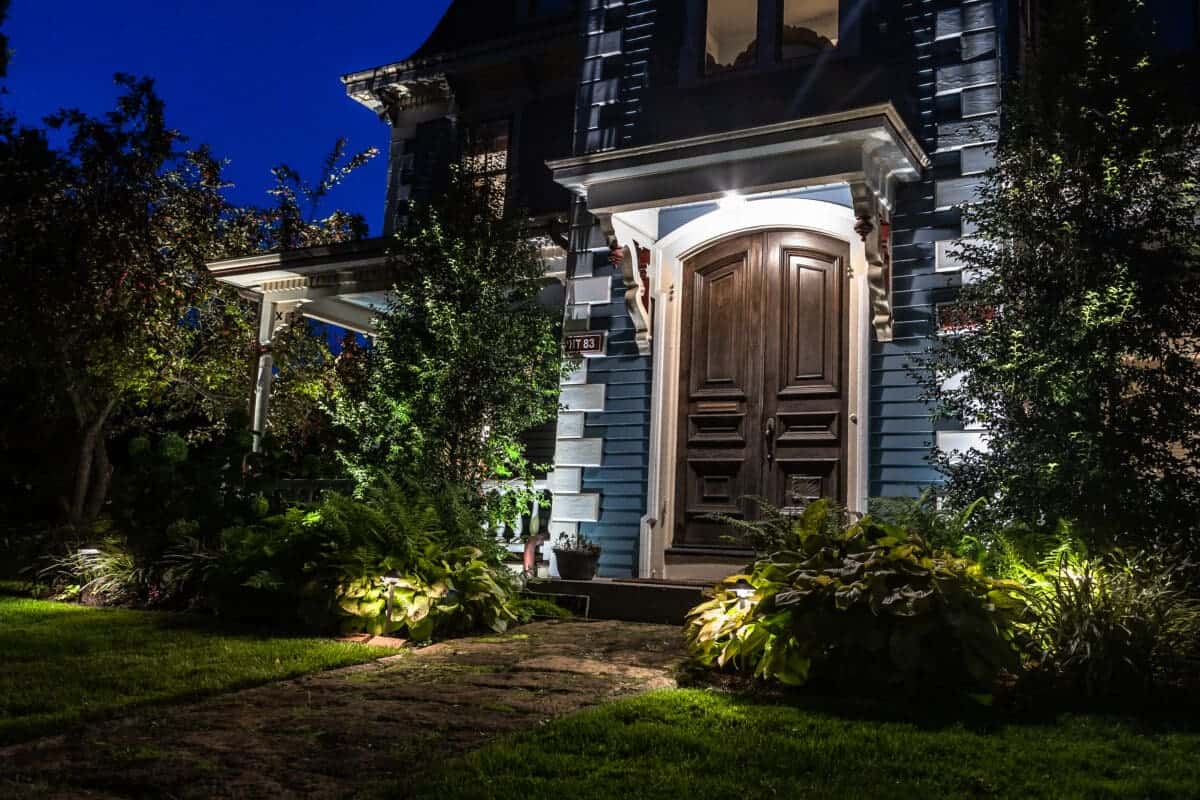 Rainfall lighting project
How a security lighting project comes together
Every property is different, but the work follows the same order: find the dark areas, plan the light, install it, then set it up so it behaves the way you expect.
Talk through the dark areas
The plan starts with how the property is used after dark: where you park, which doors get used, and which corners are hard to see.
Plan fixtures and controls
Each area gets a fixture type, a location, and a way of turning on, whether that is dusk-to-dawn, motion, a timer, or a mix.
Install the lighting
Fixtures are mounted, wire is run to them from the power source, and connections are made to stand up to wet and freezing weather.
Aim the lights and set the controls
Every fixture is tested, aimed onto the area it is meant to light, and its sensor or timer is set before the work is done.
Outdoor security lighting cost: what changes the total
The cost of a security lighting project comes down to how much of the property needs light and what it takes to get power there. Lighting one entry is a smaller job than lighting a driveway, two doors, a side yard, and the path to a shed.
The ground between the power source and each fixture matters too. Running wire under open lawn or a planting bed is simpler than getting past a paved driveway, a patio, or a stone walk. Fixture type and mounting, the controls you choose for each area, and whether the new lighting ties into lighting you already have all change the total.
If the property also has older halogen path or accent lights, an LED landscape lighting conversion can update that system while the security lighting is planned.
A clear number depends on your property, because the number of areas, the distance to power, and the surfaces in the way are different on every lot.
Security lighting and landscape lighting on one property
Security lighting and landscape lighting have different jobs, but they share the same yard. When they are planned separately, you can end up with a harsh floodlight over the garage next to soft path lights that look out of place beside it. Planned together, lower light along paths and beds takes away the deep shadows, and the security fixtures do not have to work as hard.
We can lay out your path and accent landscape lighting and the security fixtures as one plan.
Keeping security lighting working through Massachusetts winters
Outdoor fixtures sit out through every season, so small problems come up over time. Our outdoor lighting maintenance and repairs cover fixtures that have stopped working, lost their aim, or need their controls adjusted.
Winter problems with security lighting are usually small and specific: ice on a lens dims the light over a side door, a shovel knocks a driveway fixture off its aim, or snow packed against a motion sensor stops it from seeing the walk.
Shrubs and trees grow in front of fixtures and sensors, a motion sensor starts catching the street after a hedge is cut back, and a timer set in June turns on well after dark in December.
Questions about outdoor security lighting
Have a question about your property? Call 781-679-1388 Monday to Friday, 8:00 AM to 4:00 PM, and tell us about the areas you want lit.
They can if the sensor watches too wide an area, such as the street or a tree line where wildlife moves. Aiming the sensor at the path a person would actually take, and adjusting its range, cuts down on false triggers. Some areas work better with steady dusk-to-dawn light instead of motion.
It depends on the area. Entries and driveways that people use at any hour often do well with steady dusk-to-dawn light at a moderate level. Quieter spots like side yards and sheds usually suit motion lighting, and evening-only areas can run on a timer. Most properties use a mix of outdoor security lighting controls.
Yes. Planning the two together lets softer path and accent light fill in around the security fixtures, which reduces hard shadows and keeps the property from looking floodlit. We can add security lighting to a property that already has landscape lighting or lay out both at once.
Usually not. A very bright light creates glare and deep shadows right beside its beam, so it can be harder to see what is just outside the lit area. Several well-aimed fixtures with more modest light, pointed down, give even visibility and keep light out of neighbors' windows.
Yes. Most homes start with a light by the front door and maybe one over the garage. New outdoor security lighting fills the gaps in between, such as the driveway edges, side and back doors, side yards, and the walk to a shed or back gate, each with its own way of turning on.
Tell us where your property goes dark
Let us know which areas are hard to see at night, how you use them after sunset, and whether you already have outdoor or landscape lighting. We will follow up to plan your security lighting.